
You can loot the best gun in the game off a fresh spawn and still not be able to make another one. That is the first hard lesson every new player runs into, and the answer to it is one word: blueprints.
Rust blueprints are the permission system for crafting. Every item in the game is either something you already know how to make, or something you have to learn before your workbench will build it. Learn the blueprint once and it is yours for the rest of the wipe. Skip it, and that shiny AK you found is a one time weapon you can never replace.
This guide covers the whole system as it works in 2026, after the big Meta Shift update reworked how you climb the ladder: what a blueprint actually is, the two ways to unlock one, how the research table and the tech tree differ, what basic and advanced blueprint fragments are and where to farm them, and the single question that ties it all back to this site, do your blueprints wipe. Every number here is checked against the in game data, not guessed.
- What are blueprints
- Two ways to unlock
- Research table
- Tech tree
- Workbenches
- Blueprint fragments
- Farming advanced fragments
- Research vs tech tree
- Do blueprints wipe
- What to learn first
- Pro tips
- FAQ
What are blueprints in Rust?
A blueprint is the crafting recipe for a single item, tied to your character. If you know an item’s blueprint, its recipe shows up in your crafting menu and you can build it whenever you have the materials and the right workbench. If you do not know it, the recipe is greyed out no matter how many resources you are holding.
Rust splits every item into two groups:
- Default blueprints. Low level survival gear that everyone on the server knows from the first second. That includes the tool cupboard, code locks, key locks, wooden spears, bows, basic clothing, sleeping bags and the first workbench. You never have to learn these.
- Learned blueprints. Everything with real power: the auto turret, the armored door, guns, explosives like C4, medical tools, and higher tier building parts. These stay locked until you research them or buy them from the tech tree.
The critical detail people miss: blueprints are stored per player, per server. Learn the AK on one server and you keep it there through weekly wipes, but hop to a different server and you start from scratch. That is why regulars pick a main server and grind their blueprints there.
The two ways to unlock a blueprint
Every locked item in Rust is unlocked through one of exactly two systems. Knowing which one to use for a given item is most of what separates an efficient wipe from a slow one.
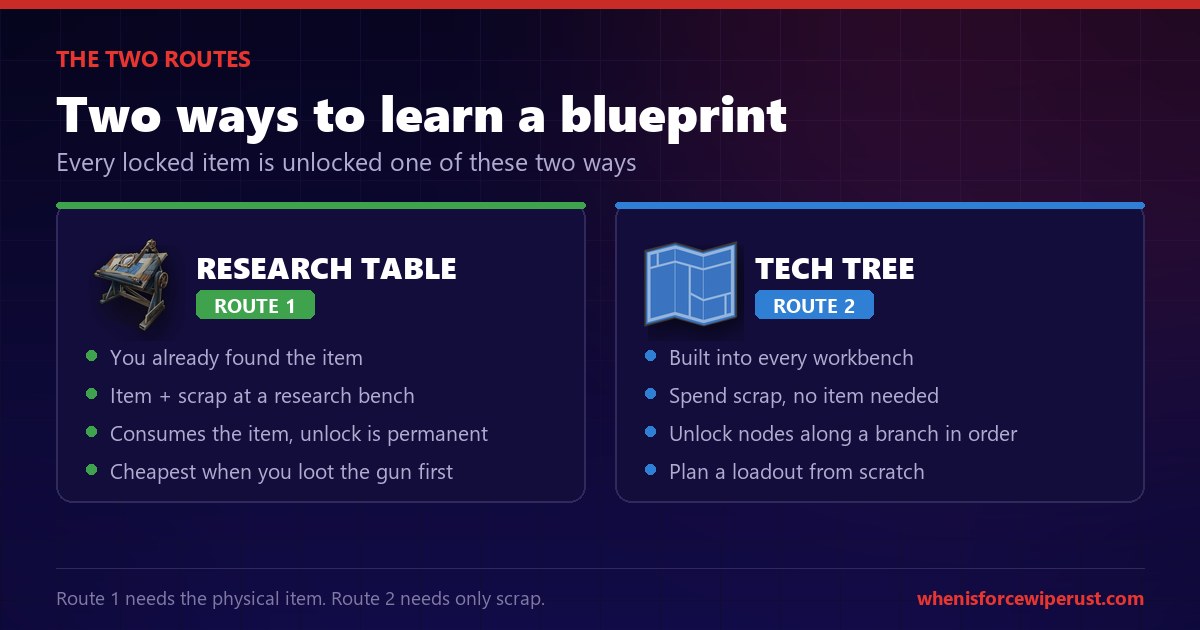
The research table turns an item you already found into a permanent blueprint. You put the item in, feed it scrap, and the table burns the item to hand you the recipe. Great when you loot a gun you cannot yet craft.
The tech tree is built into every workbench. You spend scrap to unlock nodes along a branching path, and you never need the physical item. Great when you want to plan a specific loadout from scratch and guarantee it, instead of hoping the right item drops.
Both cost scrap, the paper currency you get from recycling components and looting crates. Scrap is the real fuel of progression in Rust, and blueprints are the main thing you spend it on. Most players use both routes at once: research whatever useful items they happen to loot, and tech tree the key pieces they know they want.
The research table
The research table is the older, cheaper route, and it is still the backbone of most players’ early game. You craft one for 200 metal fragments and 20 scrap at a Workbench Level 1, place it down, and it becomes a permanent blueprint factory for anything you can find.
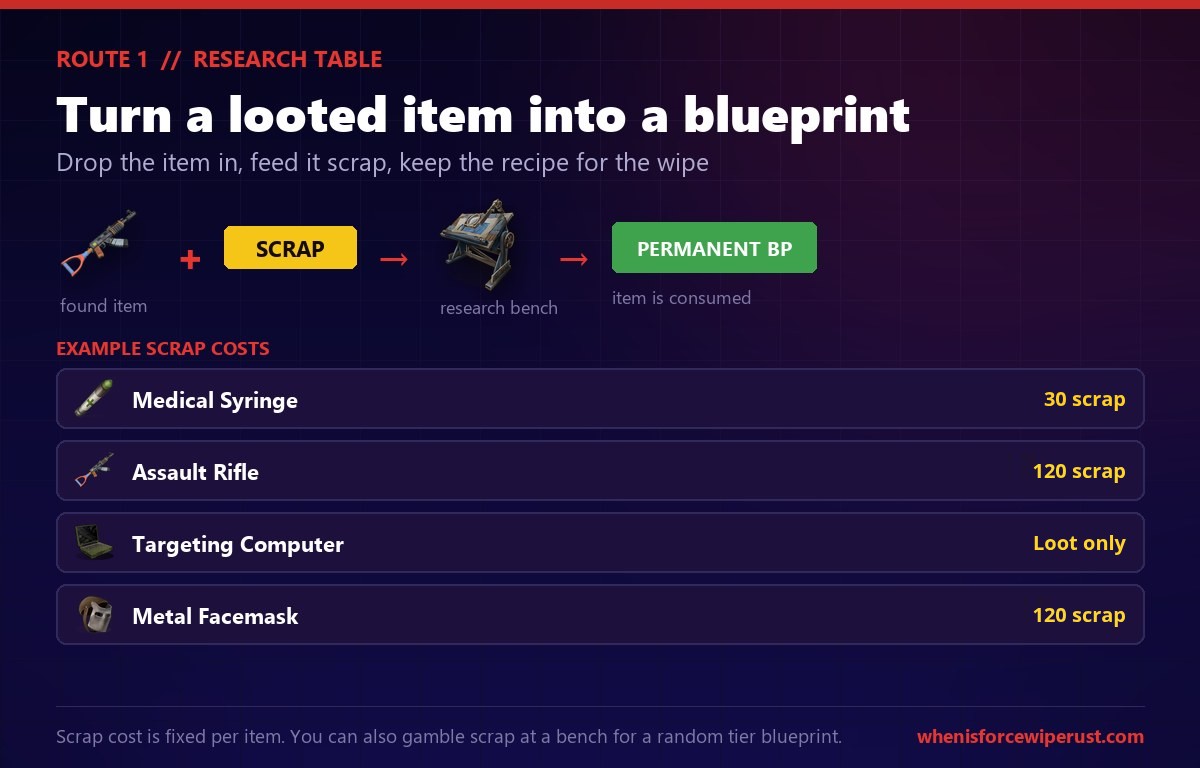
Using it is simple. Drop the item into the left slot, drop scrap into the right, and hit the research button. The table consumes the item and unlocks its blueprint forever (or until the next blueprint wipe). Each item has a fixed scrap price, roughly scaled to its power. A few real examples:
| Item | Research cost | Notes |
|---|---|---|
| Medical Syringe | 30 scrap | Cheap, worth it early |
| Metal Facemask | 120 scrap | Core armor piece |
| Assault Rifle (AK) | 120 scrap | The classic grind target |
| High External Stone Wall | 120 scrap | Same price as its tech tree node |
| Timed Explosive (C4) | 120 scrap | Also learnable via the tech tree |
There is also a gambling option. At a workbench you can spend scrap to experiment, which hands you a random blueprint you do not already own from that workbench’s tier. It costs roughly 75 scrap at tier 1, 300 at tier 2 and 500 at tier 3. It is a way to burn spare scrap late in a wipe, but it is random, so never rely on it for something specific.
The tech tree
The tech tree is the modern route, added to give players a guaranteed path to the gear they want instead of leaving it to luck. Open any workbench and you will see a giant branching map of items. Each item is a node, and you spend scrap to unlock them.
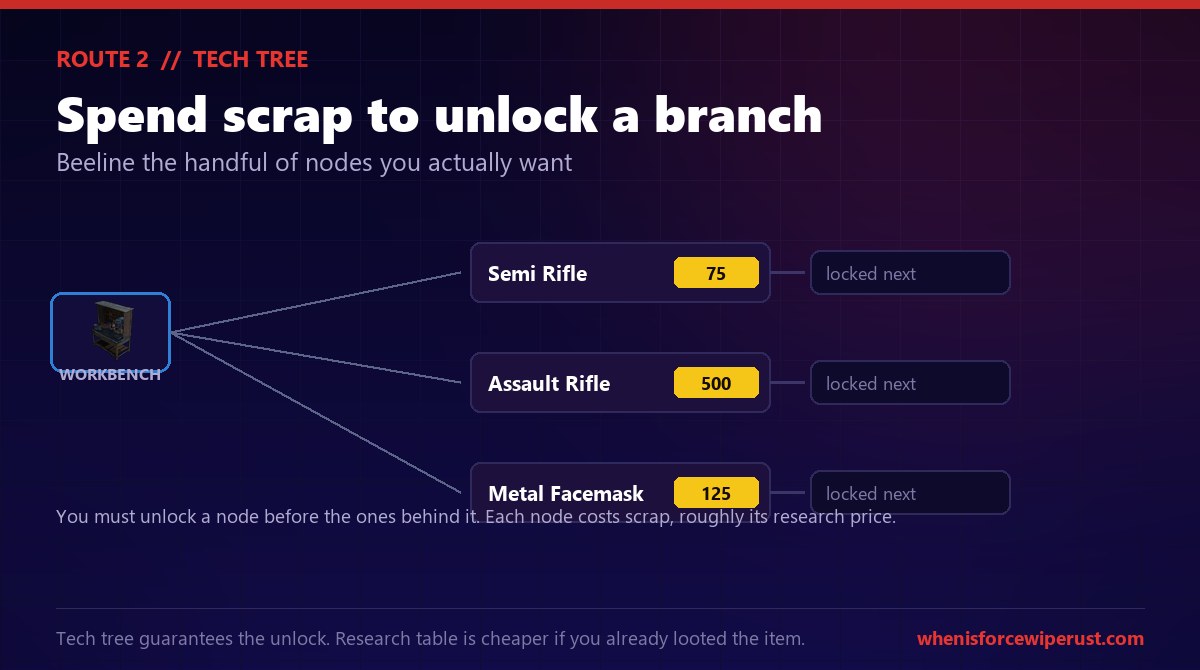
The tech tree runs on two rules:
- No item required. Unlike the research table, you never need to find the gun. Pure scrap buys the blueprint outright, which is why the tech tree is how you guarantee a specific weapon or tool.
- You unlock along connected paths. Nodes are wired together, and you must unlock the ones in front before you can reach the ones behind. To get an AK you first buy the cheaper nodes that lead to it. Since the November 2025 update each node costs exactly its research price, but a deep item still adds up because you pay for the whole path. See our Rust tech tree guide for every path cost.
Because clearing a whole tier costs thousands of scrap, almost nobody does it. The smart play is to beeline: trace the shortest chain of nodes to the one item you need and buy only those. A common early beeline is straight to the components for a decent gun and the medical syringe, ignoring the rest of the tree until later.
Workbenches and the fragment gate
Knowing a blueprint is only half of crafting. Most learned items also demand a workbench of the right tier nearby to build them, and the workbench is where the 2026 system changed the most.

| Workbench | Craft cost | Unlocks crafting for |
|---|---|---|
| Level 1 | 500 Wood + 100 Metal Fragments | Research table, basic guns, tools |
| Level 2 | 500 Metal Fragments + 20 HQM + 5 Basic Blueprint Fragments | Mid tier gear, auto turret, better armor |
| Level 3 | 1,000 Metal Fragments + 100 HQM + 5 Advanced Blueprint Fragments | Top tier: explosives, AK, armored parts |
Two things are worth burning into memory here. First, a higher workbench can craft everything a lower one can, and crafting an item above its required tier cuts the craft time by up to 75 percent. Second, the Meta Shift update in October 2025 added blueprint fragments to the tier 2 and tier 3 bench recipes, and the Pivot or Die update in November 2025 removed the scrap cost completely. You cannot buy your way to a Workbench 3 with scrap any more. You have to go find the fragments, which pulls you out onto the map and into monuments.
Basic and advanced blueprint fragments
Blueprint fragments are the newest currency in the progression chain, and they exist for one job: gating the higher workbenches. There are two kinds, and the difference is simple, Basic builds tier 2, Advanced builds tier 3.
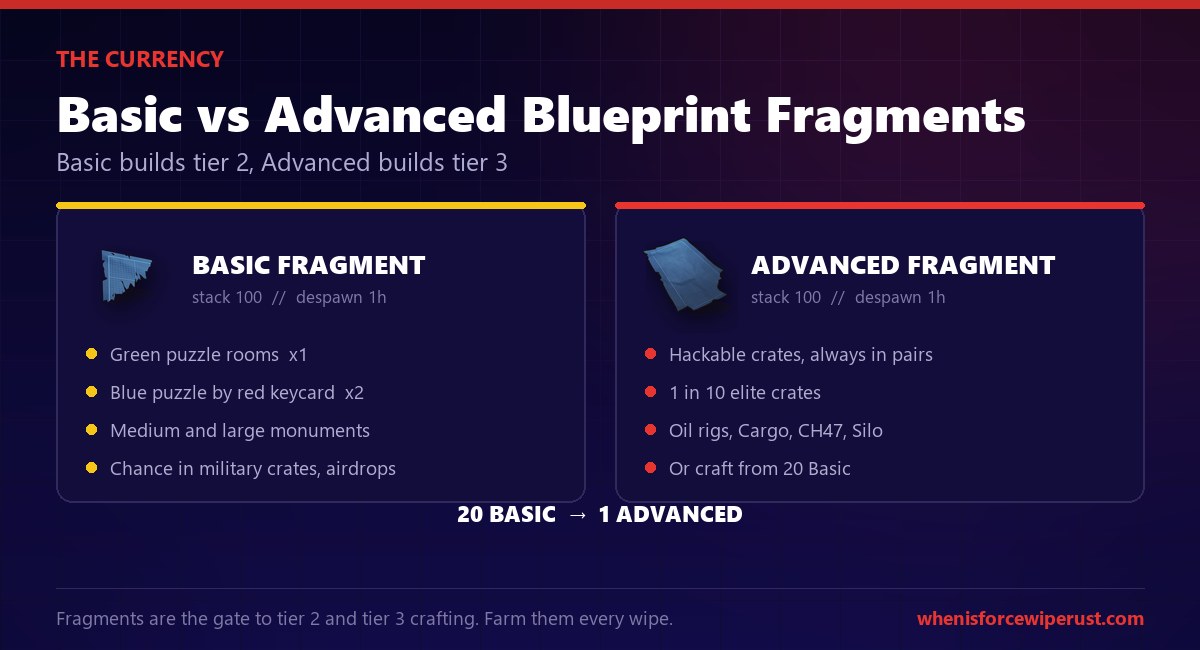
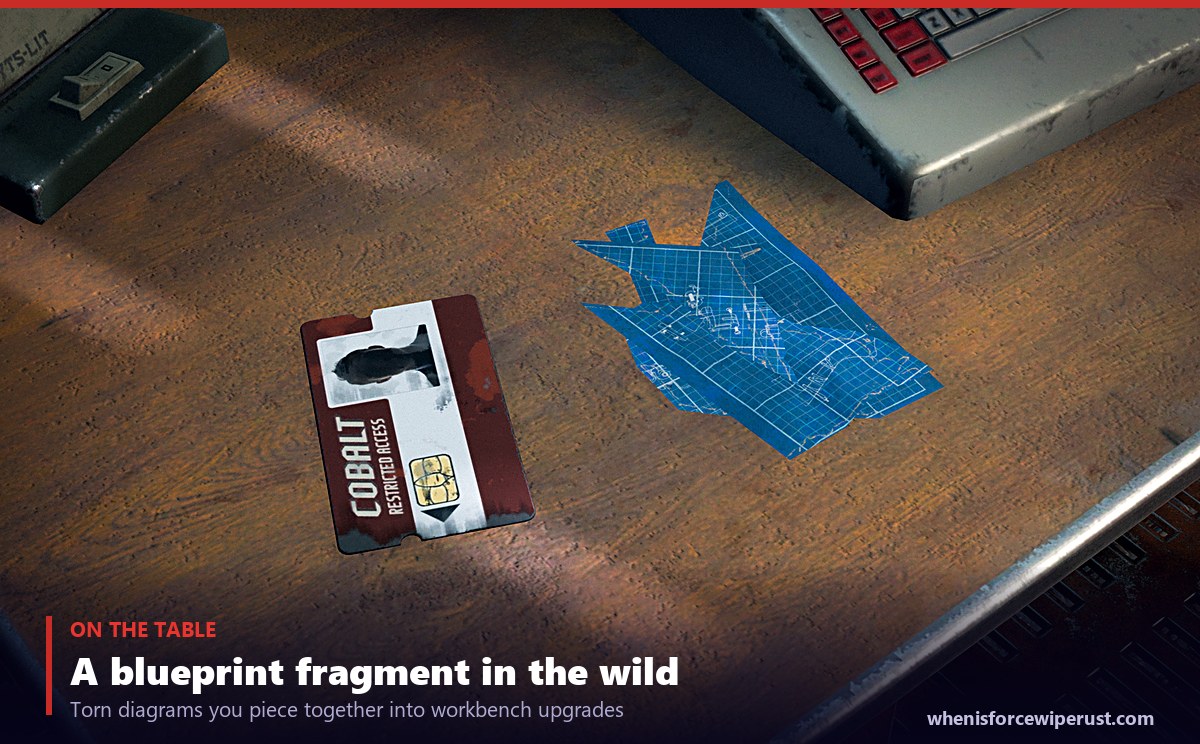
Basic Blueprint Fragments are the common tier. They stack to 100 and despawn an hour after dropping. You find them:
- Guaranteed x1 in every green card puzzle room, across most monuments
- Guaranteed x2 in blue card puzzles, sitting next to the red keycard
- Spread across medium and large monuments and airdrops
- A chance in military crates, large underwater crates, junkpile scientists, and roadside metal detecting
Advanced Blueprint Fragments are the rare tier, and they are the real bottleneck for reaching Workbench 3. They come from the game’s toughest loot:
- Guaranteed in hackable crates, always in pairs, after the 15 minute hack finishes
- A 1 in 10 chance in elite crates
- Found at Launch Site, Military Tunnels, the Nuclear Missile Silo, Underwater Labs, both oil rigs, the Cargo Ship and CH47 chinook drops
If you cannot find Advanced fragments, there is a fallback: convert 20 Basic fragments into 1 Advanced. That is a steep exchange, so grinding the source loot is almost always faster than farming 100 Basic to build a bench.
Where to farm advanced fragments
Because Advanced fragments gate the entire top tier of crafting, knowing the fastest sources is worth more than any single blueprint. The two most reliable are hackable crates and elite crates.
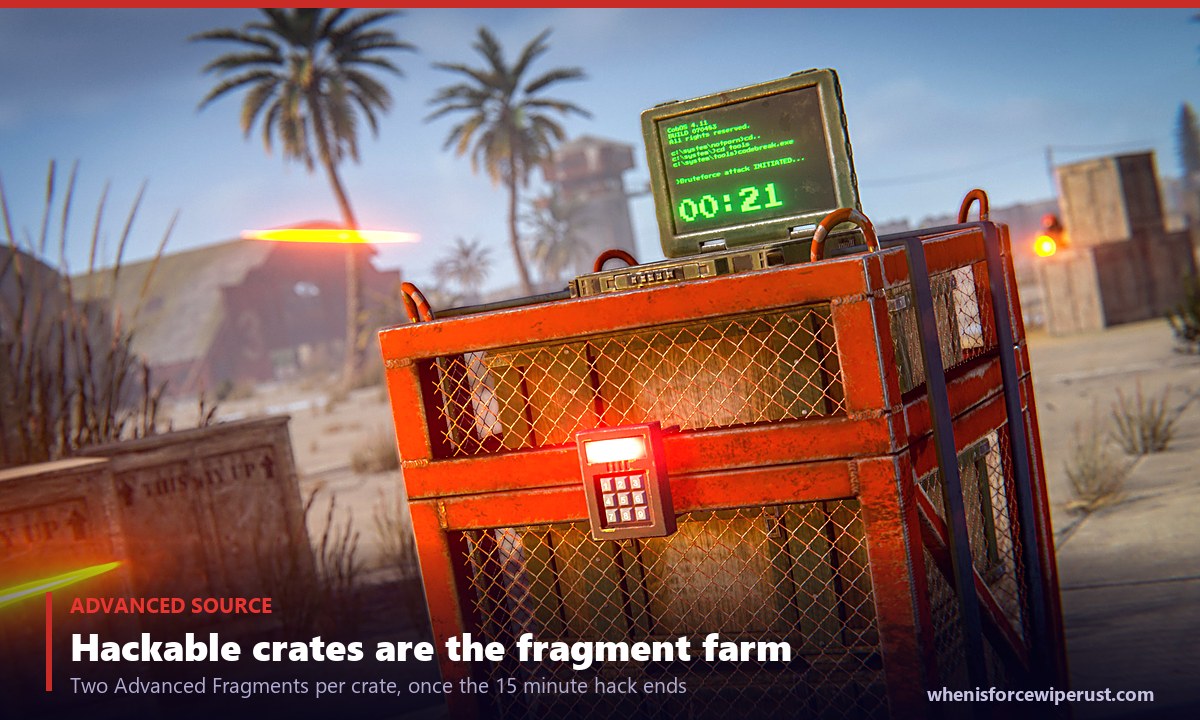
Hackable crates are the farm. They spawn at most monuments, cost nothing to open beyond time, and every single one gives two Advanced fragments plus a pile of other loot. Start the hack, hold the room for 15 minutes, and you walk away closer to a Workbench 3. Two crates and you have enough to build the bench outright.
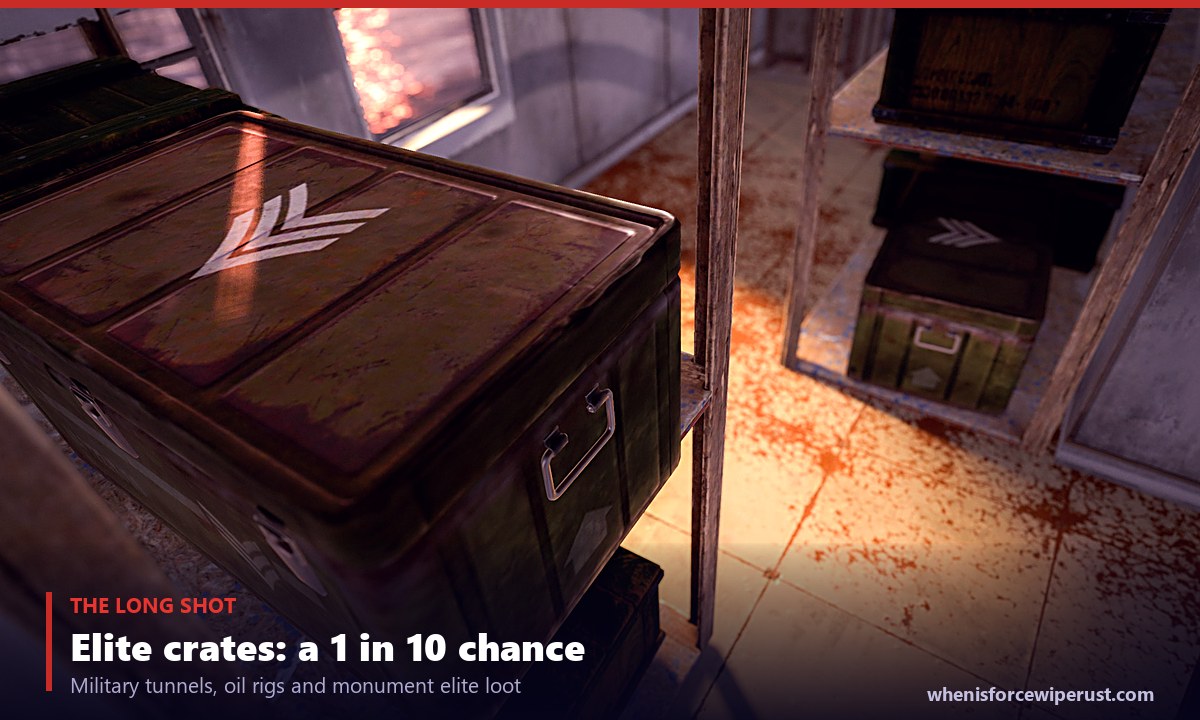
Elite crates are the side income. Each only has a 1 in 10 chance to hold Advanced fragments, but they cluster at the places you are already looting for scrap and components, Military Tunnels, the oil rigs, the missile silo, so the odds add up over a good monument run. Clear enough elite crates and the fragments come.
Research table vs tech tree: which should you use?
This is the question that decides how you spend your scrap, and the honest answer is you use both, for different items. Here is the clean split.
| Situation | Best route | Why |
|---|---|---|
| You already looted the item | Research table | Cheapest way to lock in a recipe you are holding |
| You want a specific item, no drop yet | Tech tree | Guarantees the unlock, no luck needed |
| You have spare scrap late wipe | Workbench experiment | Random blueprint, only for burning excess scrap |
| You are chasing one endgame gun | Tech tree beeline | Buy only the path to it, skip the rest of the tier |
| You loot a lot of random gear | Research table | Convert every useful find into a permanent recipe |
As a rule of thumb: research what you find, tech tree what you need. A solo who researches every useful drop and beelines the tech tree for two or three key items will be crafting guns and explosives long before someone trying to buy the whole tree with scrap.
Do blueprints wipe in Rust?
This is the part that ties straight back to why this site exists, because the answer depends entirely on the wipe. Rust runs two different kinds of reset, and they treat your blueprints very differently.
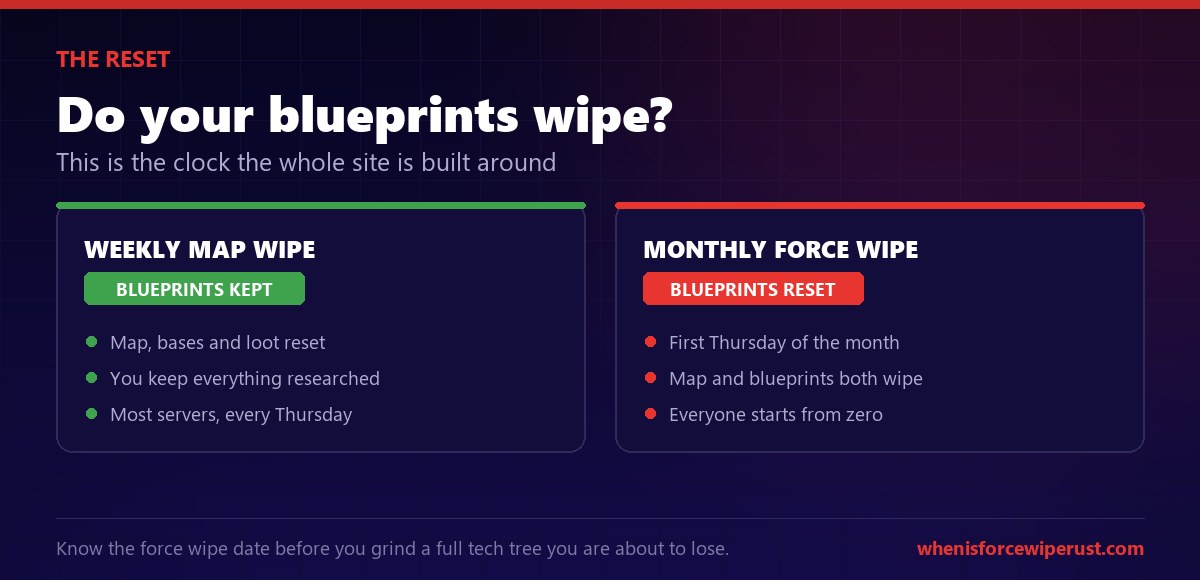
- Weekly map wipe: resets the map, every base and all loot, but leaves your blueprints alone. You keep everything you researched. This is the standard weekly reset on most servers.
- Monthly force wipe: lands on the first Thursday of every month with Facepunch’s monthly update, and on most official and mainstream servers it wipes blueprints too. Map, bases, loot and every recipe reset, and the whole server starts from zero.
So the honest answer to “do blueprints wipe” is: not on the weekly, yes on the monthly force wipe, on the vast majority of servers. Some servers run blueprints as permanent or on longer cycles, so the setting is technically per server, but the mainstream rhythm is map weekly, blueprints monthly. That monthly blueprint reset is exactly the clock this whole site is built around.
Do not grind a full tech tree the night before a force wipe. Every blueprint you buy is gone the moment the map resets, so check the countdown before you spend your scrap.
Check the wipe countdownWhat blueprints to learn first
Fresh wipe, limited scrap, and a hundred locked items. Where do you spend? After years of the meta settling, most experienced players front load the same handful of blueprints because they pay for themselves fastest.
- Medical Syringe (30 scrap). Cheap, keeps you alive, and you will craft dozens. The best value blueprint in the game.
- A workbench 2 gun path. Research or tech tree a reliable rifle so you are not stuck on a bow when you meet geared players.
- Metal armor. The armored door and metal facemask keep your loot behind something that actually resists a raid.
- Explosives, when you can afford them. Satchel charges and eventually C4 turn you from a farmer into a raider. Plan the raid cost first with the raid calculator.
- Base upgrades. Better walls and an auto turret once your core progression is sorted.
Blueprint pro tips
- Recycle for scrap constantly. Every component you do not need becomes scrap at a recycler, and scrap is what buys blueprints. Recycle road signs, gears, tarps and spare guns on sight.
- Research before you craft a rare find. Loot a gun you cannot yet make? Research it before you use it up, so one drop becomes an unlimited supply.
- Do not double pay. If you already researched an item, do not also buy it on the tech tree. Check your crafting menu first, a known blueprint shows as craftable.
- Farm fragments on monument runs, not in isolation. You collect Basic and Advanced fragments as a side effect of doing puzzles and hackable crates for other loot. Fold them into a run you were doing anyway.
- Match your spend to the wipe clock. The single biggest scrap mistake is teching endgame gear right before a blueprint wipe. Know the date first.
Rust blueprints FAQ
What are blueprints in Rust?
How do you get blueprints in Rust?
Do blueprints wipe in Rust?
What is the difference between the research table and the tech tree?
What are blueprint fragments used for?
Where do you find advanced blueprint fragments in Rust?
Where do you find basic blueprint fragments?
How much scrap does it cost to research an AK in Rust?
How much does each workbench cost in Rust?
Are blueprints saved per server?
Can you lose blueprints when you die?
What items are default blueprints in Rust?
How long does a blueprint fragment last on the ground?
What is the fastest way to unlock everything in Rust?
Sources
- Facepunch, Meta Shift update devblog (October 2025), for the workbench fragment costs, Basic and Advanced Blueprint Fragment drop locations, and the 20 to 1 conversion.
- RustHelp Rust Wiki, Research Table, Workbench Level 1, 2 and 3, and Basic Blueprint Fragment item pages, for the exact craft costs, shortnames and stack sizes.
- Rustafied, Blueprints 3.0: Progression in Rust, for the default versus learned blueprint split, per server storage, and the research table experiment scrap costs.
- Facepunch Rust Wiki blueprint and workbench references for the default blueprint list and crafting tier behaviour.