
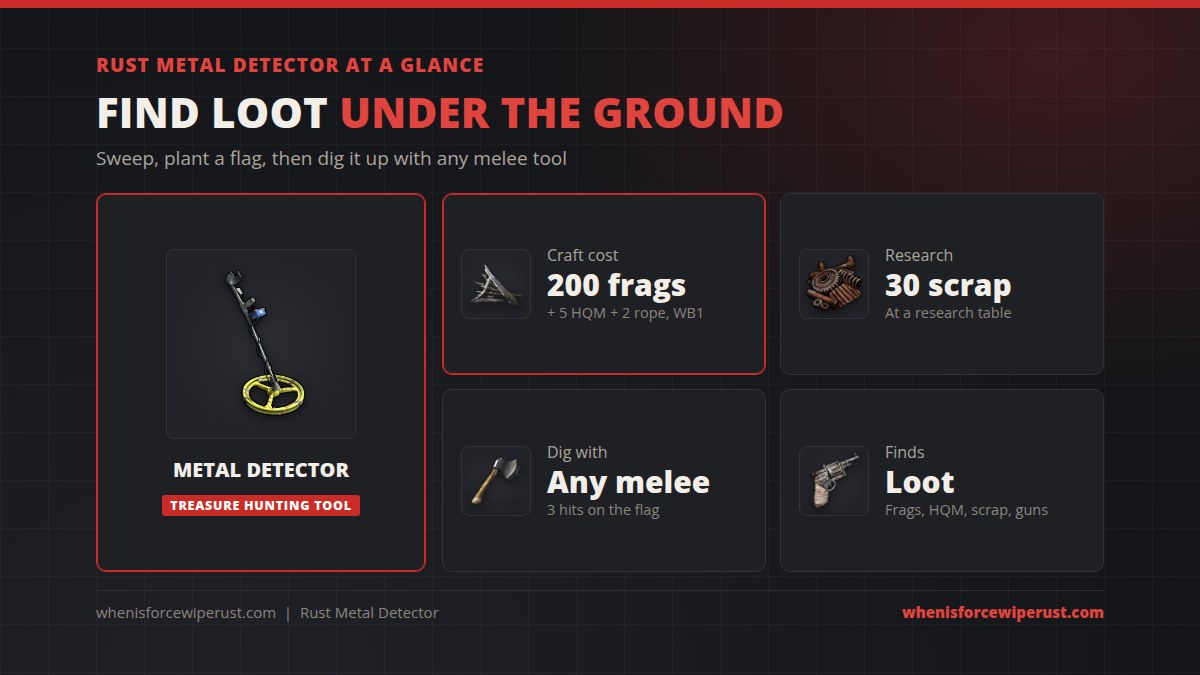
The metal detector turns an empty walk across the map into a treasure hunt. It picks up metal buried under the ground, you plant a flag on the spot, and a few hits with any melee tool pop the loot out. Most of what you dig up is metal fragments, high quality metal and scrap, but every so often a pistol, a salvaged tool or a piece of road sign armor comes out of the dirt.
This Rust metal detector guide covers the craft cost, how to get the blueprint, how to use it step by step, where it works and where it does not, what you can find, the buried gear system added in 2025, and the tips that make a detecting trip worth the time.
- Craft Cost
- Blueprint
- How to Use It
- Where It Works
- What It Finds
- Buried Gear
- Where to Find One
- Tips
- FAQ
Metal Detector Craft Cost
Once you know the blueprint, the metal detector is a cheap early wipe craft. Everything in it comes from a few roadside barrels and some cloth.
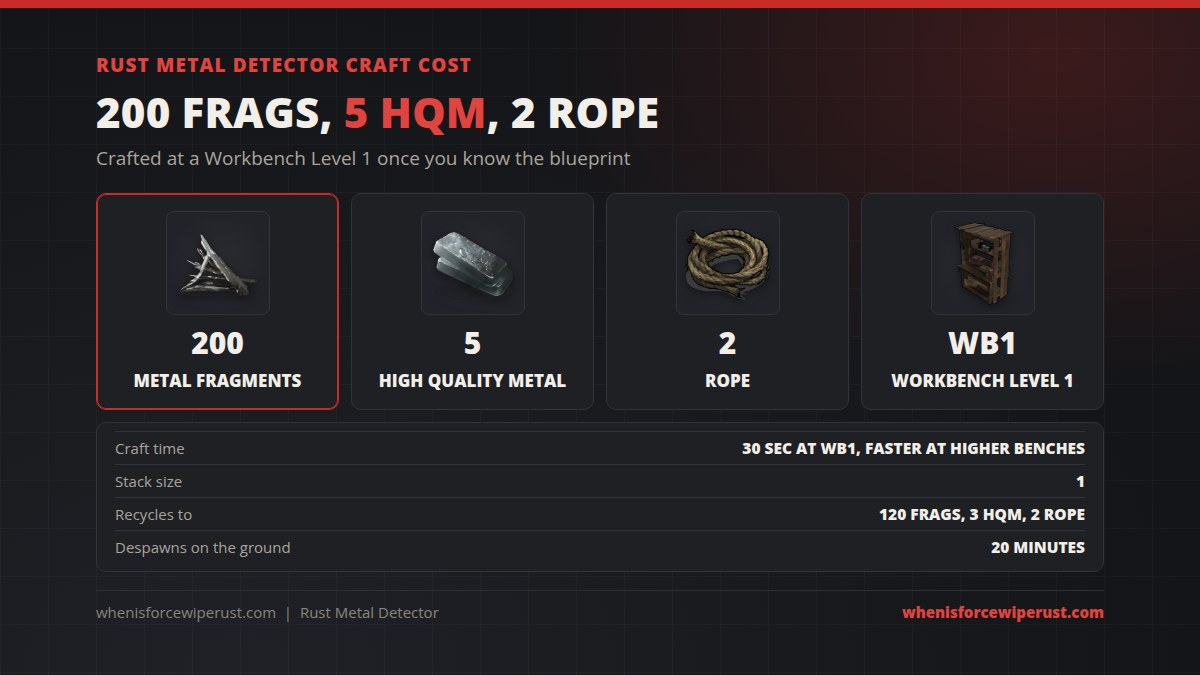
| Stat | Metal Detector |
|---|---|
| Craft cost | 200 metal fragments, 5 high quality metal, 2 rope |
| Workbench | Workbench Level 1 |
| Craft time | 30 seconds at WB1, faster at WB2 and WB3 |
| Research cost | 30 scrap |
| Stack size | 1 |
| Recycler | 120 frags, 3 HQM, 2 rope (80 frags, 2 HQM, 1 rope at a safe zone recycler) |
| Despawn time | 20 minutes when dropped |
| Item shortname | metal.detector (ID 1168856825) |
The rope is usually the part people are missing. Two rope is easy to get from cloth or roadside crates, and the HQM comes from barrels, HQM nodes or the recycler.
Metal Detector Blueprint
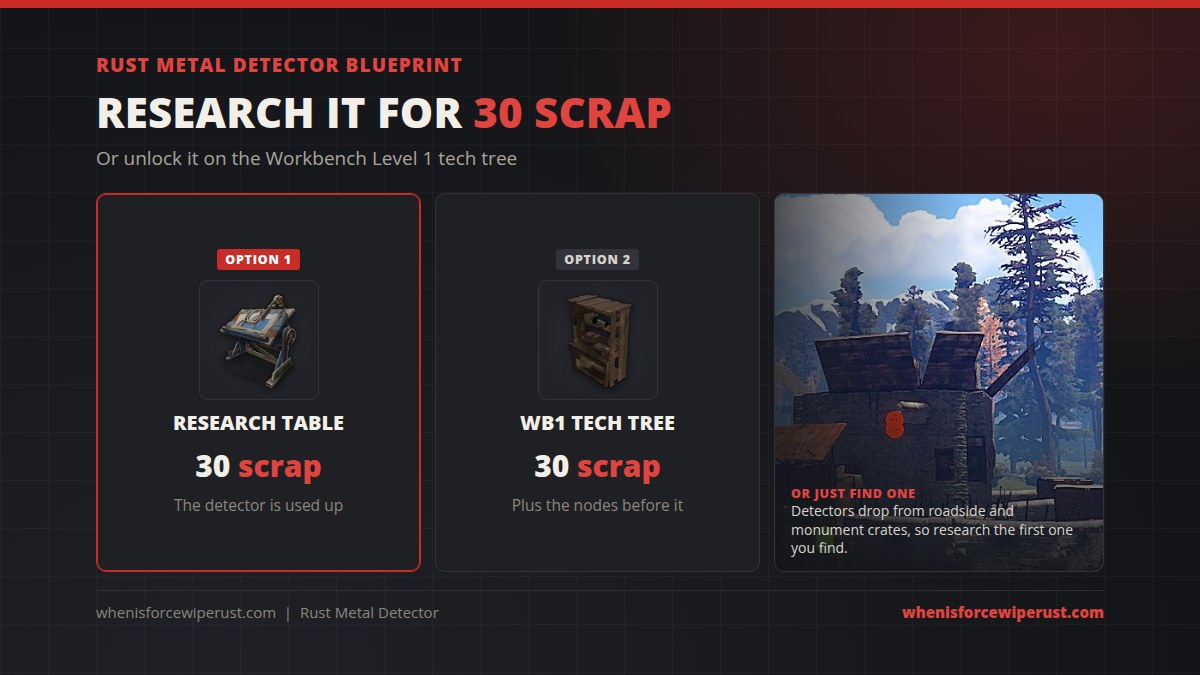
- Research table: put a metal detector and 30 scrap into a research table. The detector is used up.
- Workbench Level 1 tech tree: the metal detector node costs 30 scrap, the same as research, but you have to unlock the nodes in front of it first, so the full path costs more.
If you find a detector in a crate, research it straight away. 30 scrap is much cheaper than walking the tech tree. Our Rust blueprints guide explains how the two options compare for every item.
How to Use a Metal Detector in Rust
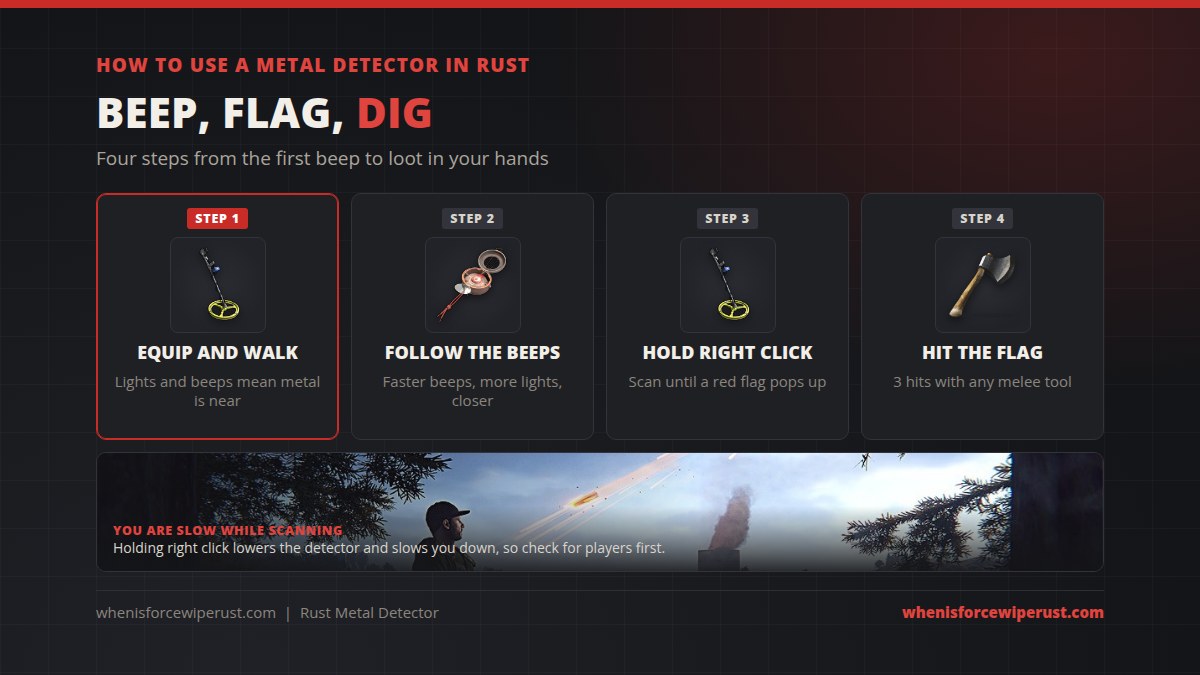
- Equip it and walk. Put the detector in your hotbar and walk with it out. A light on the bar and a beep tell you there is buried metal within a few meters.
- Follow the beeps. The beeps get faster and more green lights turn on as you get closer. Yellow lights mean you are almost on top of it.
- Hold right click to scan. This lowers the detector to the ground. Sweep slowly until a small flag appears at your feet and turns into a solid red flag.
- Hit the flag. Switch to any melee tool, a rock, a hatchet or a pickaxe, and hit the flag 3 times. The flag disappears and the loot pops up out of the ground.
Where to Use a Metal Detector
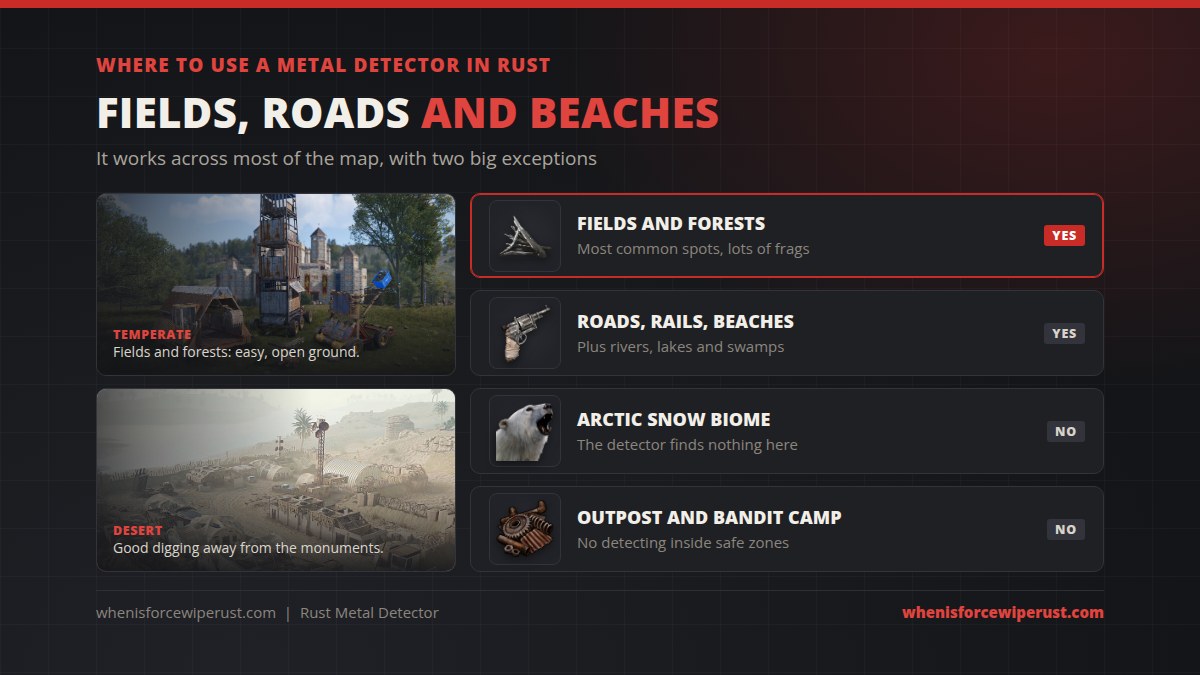
| Area | Works? | Notes |
|---|---|---|
| Fields | Yes | Open ground, easy to spot players coming |
| Forests | Yes | Good spot for rarer tool finds |
| Roads and rails | Yes | Lots of traffic, so more lost gear but more danger |
| Beaches | Yes | Except snowy beaches |
| Rivers, lakes and swamps | Yes | Sweep the banks |
| Desert | Yes | Works like temperate ground |
| Arctic snow biome | No | The detector finds nothing in the snow |
| Outpost and Bandit Camp | No | No detecting inside safe zones |
If you are headed north for the Arctic Research Base, leave the detector at home. It will not find anything once you are in the snow.
What Does a Metal Detector Find?
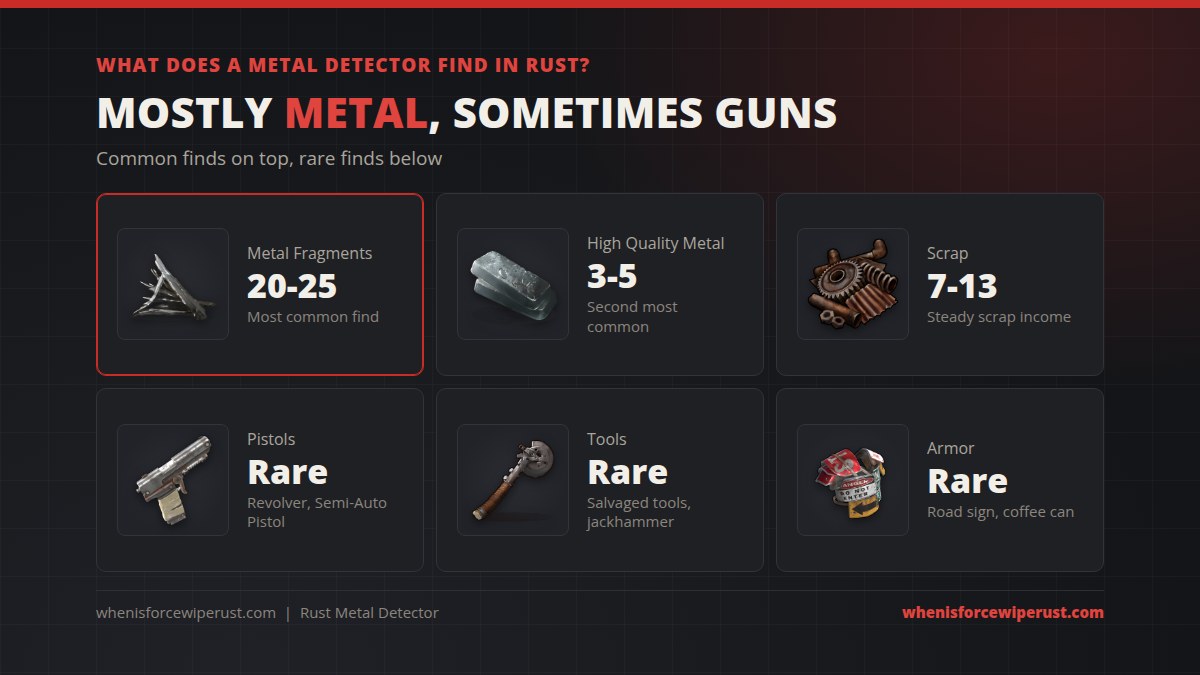
Every flag rolls from a loot table that changes a little with the ground you are standing on, but the common results are the same everywhere:
- Metal fragments (20-25): the most common find, around half of all digs.
- High quality metal (3-5): the second most common find.
- Scrap (7-13): a steady trickle for research and the tech tree.
The rare rolls are the exciting part: a Revolver or Semi-Automatic Pistol, pistol and rifle ammo, salvaged tools, a jackhammer (about 2% in forests) or a chainsaw, road sign armor and a coffee can helmet, plus some food. None of it is guaranteed, so treat the detector as a metal and scrap farm with a lottery ticket on top.
Buried Gear: Digging Up Other Players’ Loot
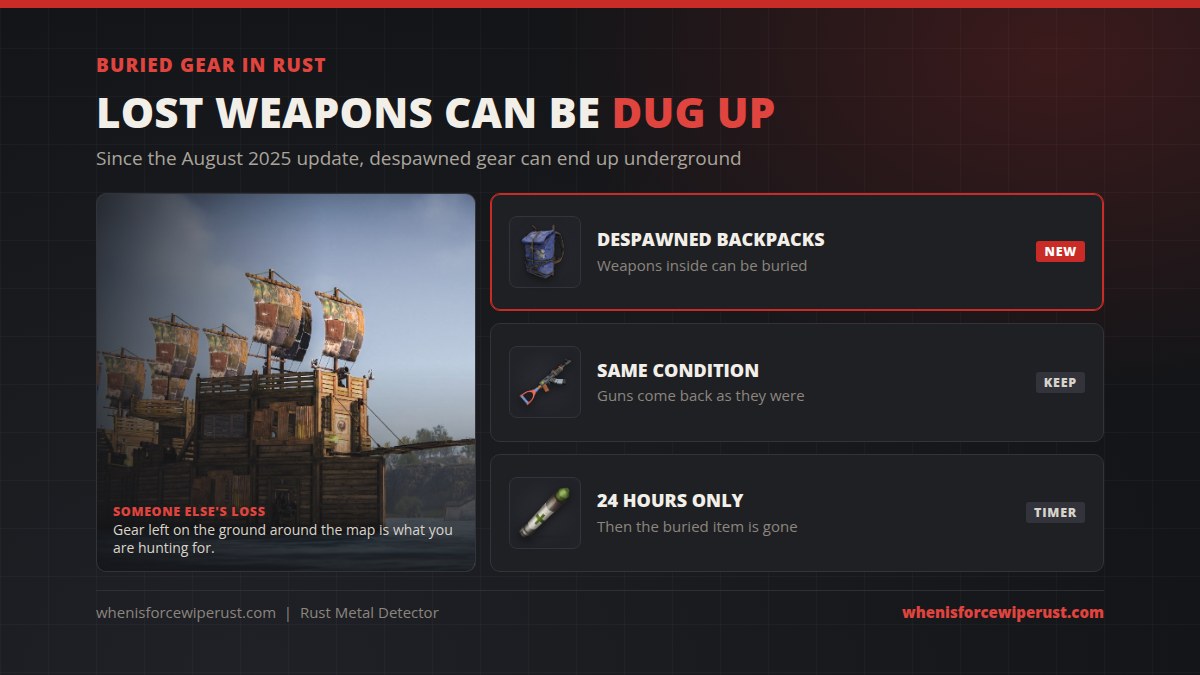
The 2025 metal detector rework added a second kind of treasure. When a dropped weapon or a backpack despawns on the ground, there is a chance the weapon gets buried instead of disappearing. Anyone with a metal detector can then find it and dig it up.
- Backpacks count: weapons inside a backpack that despawns can be buried too.
- Same condition: the weapon comes back with the condition it had when it was lost.
- 24 hours: a buried item expires after about a day if nobody finds it.
- No stashing: buried items are placed on a rough grid, so you cannot drop a gun on purpose and dig it back up in the same spot.
The chance of a weapon being buried goes up with how many weapons get dropped, so busy servers and areas with lots of fights have more of it.
Where to Find a Metal Detector
You do not have to craft your first one. Metal detectors drop from normal crates at roadsides and low tier monuments, from underwater lab crates, and from some scientists. The drop chance is low, so most players craft one after researching it. If you want one early, a single recycler run of roadside loot usually covers the frags and HQM.
Rust Metal Detector Tips
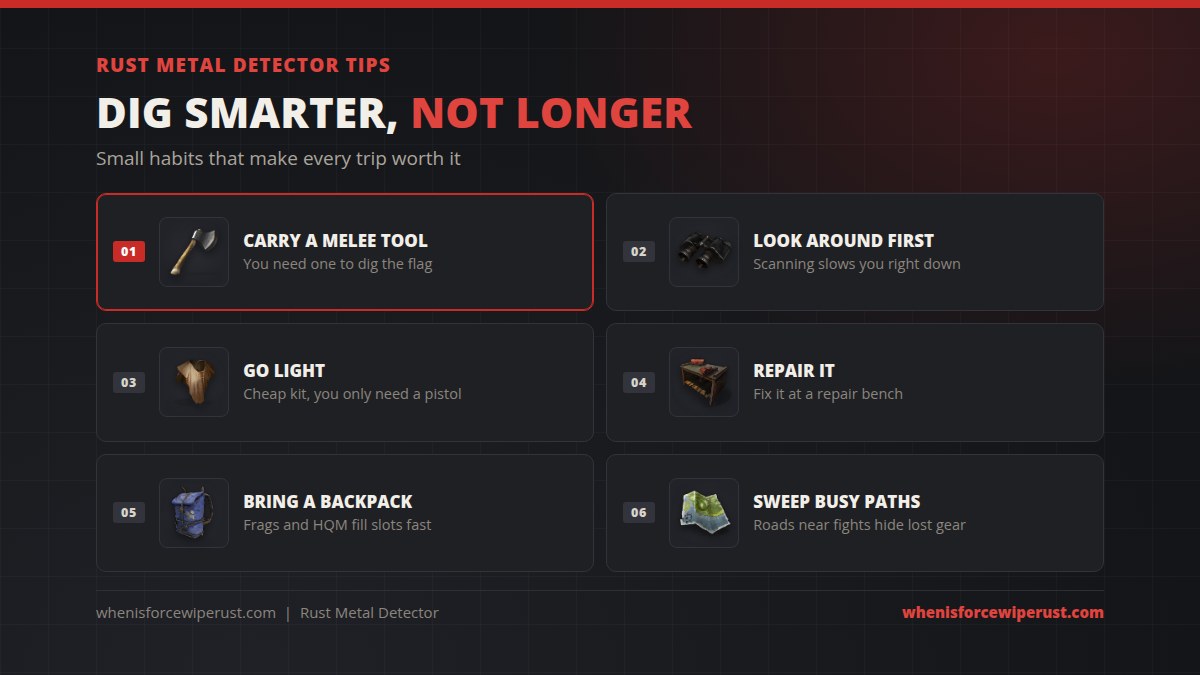
- Carry a melee tool. You cannot dig the flag with the detector itself. A rock works, but a hatchet or pickaxe is faster to swap to.
- Look around first. Scanning slows you down, so check the treeline before you hold right click.
- Go light. Detecting is a cheap kit activity. A pistol and some basic armor is enough.
- Repair it. The detector loses condition as you use it. Fix it at a repair bench instead of crafting a new one.
- Bring a backpack. Frags, HQM and scrap fill slots fast on a long sweep.
- Sweep busy paths. Roads and areas near fights are where weapons get dropped and lost, which is where buried gear shows up.
Rust Metal Detector FAQ
How much does a metal detector cost in Rust?
It costs 200 metal fragments, 5 high quality metal and 2 rope, and you need a Workbench Level 1 to craft it.
How much scrap is the metal detector to research?
30 scrap at a research table. On the Workbench Level 1 tech tree the node costs 30 scrap plus the nodes before it.
How do you dig with a metal detector in Rust?
Hold right click to scan until a red flag appears, then switch to any melee tool and hit the flag 3 times. The loot pops out of the ground.
What does a metal detector find in Rust?
Mostly 20-25 metal fragments, 3-5 high quality metal or 7-13 scrap. Rare finds include pistols, ammo, salvaged tools, a jackhammer or chainsaw, and road sign or coffee can armor.
Does the metal detector work in the snow?
No. The metal detector finds nothing in the arctic snow biome, and it does not work inside the Outpost or Bandit Camp safe zones.
Can you dig up other players’ weapons in Rust?
Yes. Since the August 2025 update, weapons that despawn on the ground or inside a backpack can be buried for about 24 hours, and anyone with a metal detector can dig them up in the same condition.
Do you need a shovel to use the metal detector?
No. Any melee tool works, including a rock, a hatchet or a pickaxe.
Sources and Further Reading
- Recipe, research, recycling and despawn numbers: rustlabs item data
- RustHelp, Metal Detector
- Corrosion Hour, The Rust Metal Detection System
- Facepunch, Harder Core update notes
- Facepunch, Bags To Riches update notes
- Every item ID: Rust item IDs list